

What’s the Biggest Tree in Muir Woods National Monument?
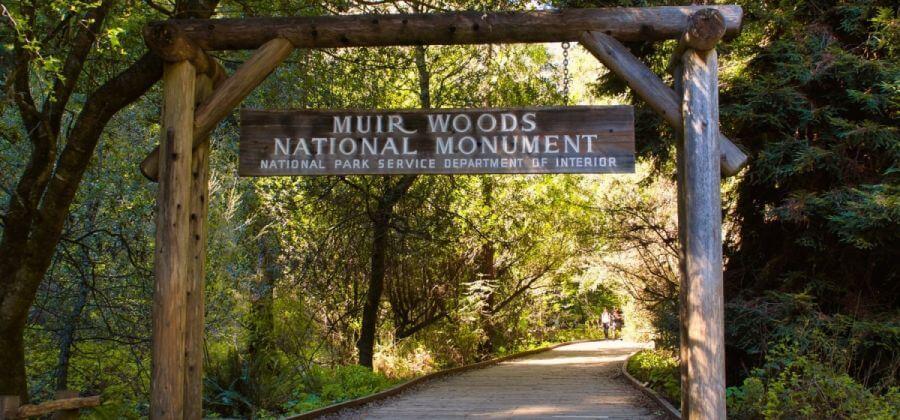
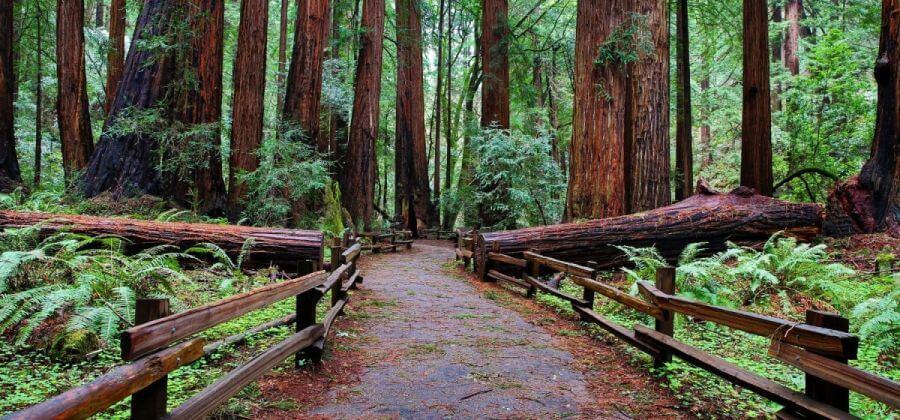
Less than an hour’s drive from San Francisco is one of the last remaining giant redwood forests in California – the Muir Woods National Monument. With only 5% of old-growth redwood trees still standing, nature lovers from all over the world come to visit these coastal redwood trees in Northern California.
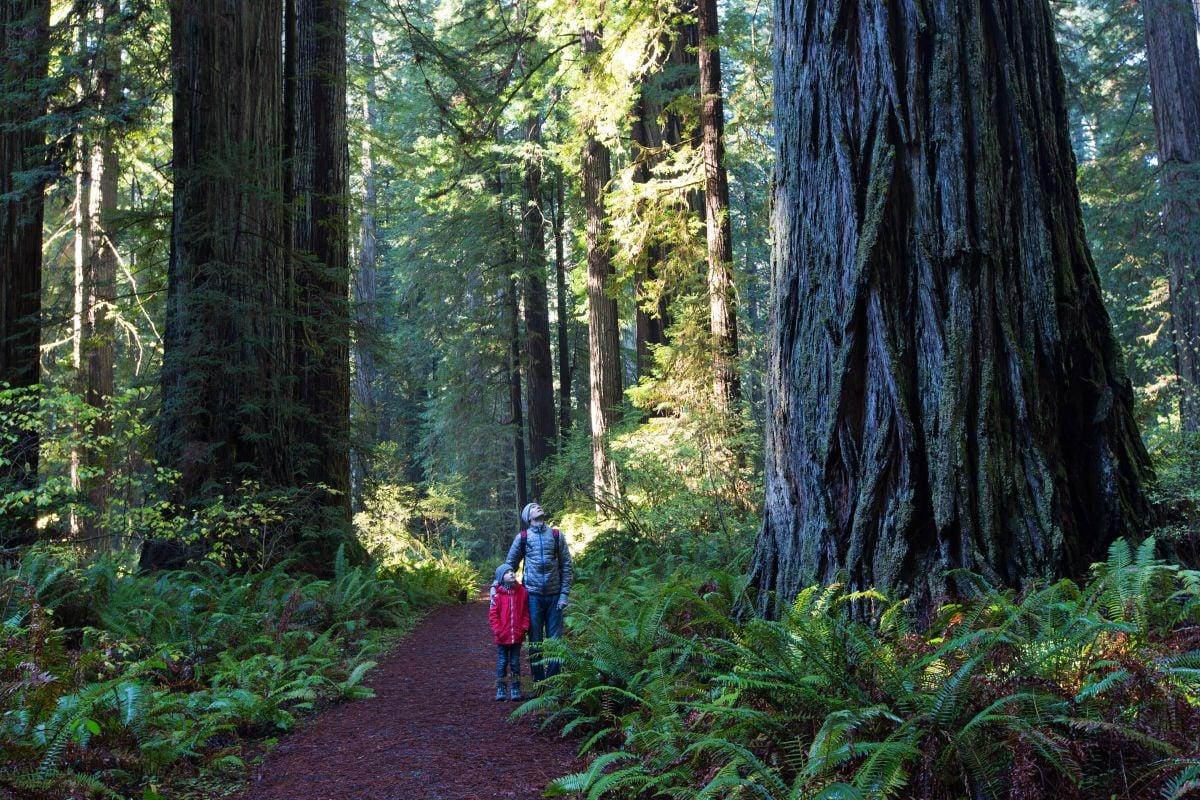
Muir Woods’ biggest tree — known as Tree 76 — is 250 feet high and over 750 years old, and is easily accessible on the trail to Cathedral Grove.
As one of the closest redwood forests to San Francisco, Muir Woods National Monument is a popular — and crowded — destination, and you can no longer get into the park without planning ahead.
Here’s everything you need to know about getting to Muir Woods from San Francisco and how to see its biggest tree without the hassle.
Featured tours

Exclusive Muir Woods, Napa & Sonoma Valley Wine Tour
The only wine country tour to combine three Napa & Sonoma Valley wineries with a morning excursion to San Francisco’s stunning Coast Redwood forest – Muir Woods.
Muir Woods Redwood Forest and Sausalito Morning Tour
This is the only Muir Woods tour with guided audio narration inside the park. Walk under the world’s tallest trees, then enjoy charming Sausalito.
What Is There to See in Muir Woods?
Northern California is home to the giant coastal redwood, the world’s tallest tree species. At maturity, the Sequoia Sempervirens can reach a height of 380 feet (116 meters). Muir Woods’ biggest tree isn’t the tallest one in the world, but it measures a still-impressive 250 feet.
The most breathtaking groves in Muir Woods National Monument are:
Bohemian Grove has some of the tallest trees in the park. This grove was the original meeting place of the Bohemian Club, an organization of wealthy and powerful Americans. This area can be crowded so try to arrive early.
Cathedral Grove is one of the most enchanting places in the park, and home to Muir Woods’ biggest tree. The tall and straight redwoods give the place a church-like vibe. The sign at the grove’s entrance reads: “Cathedral Grove, enter quietly.” It’s a good place for some silent meditation.
Kent Memorial is located in the middle of a stand of very tall trees between Bridge 3 and 4. The memorial to benefactor William Kent is next to a huge fallen tree. Look for this peaceful place just 100 feet off the main trail, right where the Fern Trail starts.
Wildlife in Muir Woods
While the giant redwoods are the star of the show, the park is home to more than 380 plant and animal species. Redwood Creek, which runs through the middle of Muir Woods, is an important spawning habitat for coho salmon and steelhead trout. The annual migration begins when winter rains breach the Muir Beach sandbar. If you have timed your Muir Woods hike right, you can watch the spawning from any of the four bridges that cross the creek.
Muir Woods has relatively few bird species, since the tannin in the trees repels insects, and the shady canopy limits the flowers and fruits available to birds. The park, however, is home to the endangered Northern Spotted Owl.
Where light penetrates beneath the redwood trees you can find other plants like red alders, Douglas fir, California maples, redwood sorrel, and ferns. If you’re lucky, you may also spot deer, chipmunks, skunks, river otters, and squirrels.
Muir Woods Hiking Trails
There are six miles of hiking trails within the official boundaries of Muir Woods National Monument, as well as longer trails that cross the park en route to Mt. Tamalpais or Stinson Beach. The best Muir Woods hiking trails are along an easy-to-follow loop, with several Redwood Creek crossovers and trail spurs into the less-traveled hillside areas.
Here is a National Park Service map to help you plan your time in Muir Woods. You can also pick up a paper map at the entry gate to the park.
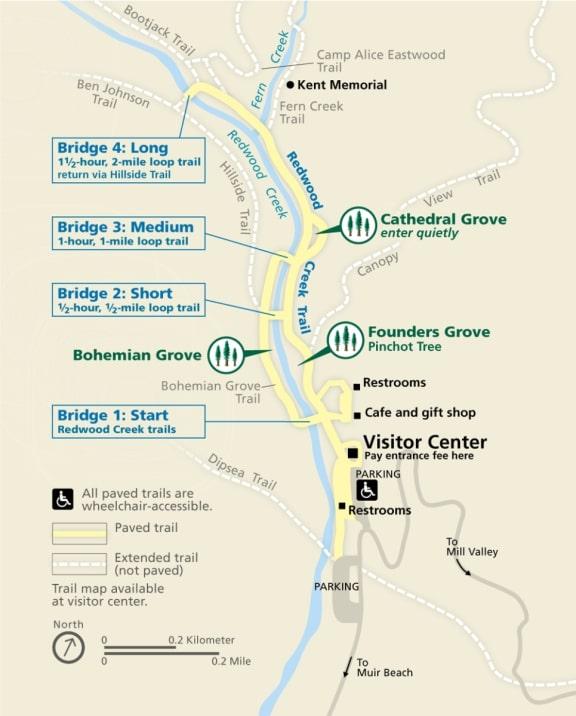
Leaving out any of the spur trails, your hiking options are:
Follow the Redwood Creek Trail boardwalk from the Visitor Center and return via the Hillside and Bohemian Grove trails at Bridge 2 (½-hour loop), Bridge 3 (1-hour loop), or Bridge 4 (2-hour loop). The main Muir Woods trails are flat and easy for walking, including some paved trails and boardwalks.
Here’s a closer look at these three options:
Bridge 2 Loop
Distance: 0.5 miles (0.8 km)
Duration: 30 minutes
Difficulty: Easy
From the Visitor Center, walk north on the Redwood Creek Trail up the east side of the creek. After Founders Grove, look for Bridge 2. Cross over and return to the start on the Bohemian Grove Trail on the west side of the creek. Enjoy views of old growth redwood forest. Stroller and wheelchair accessible.
Bridge 3 Loop
Distance: 1 mile (1.6 km)
Duration: 1 hour
Difficulty: Easy
Begin at the Visitor Center. Walk up the Redwood Creek Trail boardwalk past Founders Grove and Bridge 2. When you reach Bridge 3, cross over the creek and reverse your direction on the Bohemian Grove trail. On the way back, see some of the tallest trees in the park, interspersed with younger redwoods.
Basically, your hiking options without taking any of the spur trails, such as Fern Creek, are to follow the Redwood Creek Trail boardwalk from the Visitor Center and return via the Hillside and Bohemian Grove trails at Bridge 2 (1/2 hour loop), Bridge 3 (1 hour loop), or Bridge 4 (2 hour loop). The main Muir Woods trails are flat and easy walking.
Bridge 4 Loop
Distance: 2 miles (3.2 km)
Duration: 2 hours
Difficulty: Moderate
The longest loop trail in Muir Woods begins at the Visitor Center and follows Redwood Creek a ½-mile (.8 km) past Cathedral Grove to Bridge 4. On your way, you’ll pass the trailhead for the Fern Creek Trail. There are some large trees here and it is a short stroll to the Kent Memorial. The return section of the Muir Woods hike is on Hillside Trail, which passes through an upland environment and eventually returns to the Bohemian Grove trail.
Tips for hiking in Muir Woods:
- During the winter season, ask about the latest trail conditions at the Visitor Center. Trails can be slippery or muddy after rain.
- You can purchase detailed topographical maps at the Visitor Center.
- Bring plenty of water — at least a liter for each hour of hiking.
- Dress in layers with a waterproof top layer.
- Wear sunscreen and a brimmed hat to protect your skin.
- Please stay on the trails.
History of Muir Woods
Thousands of years ago, giant coastal redwoods covered much of Northern California. They have endured hundreds if not thousands of storms, droughts, winters, and fires. Some of the redwood trees living today were around before Europeans arrived on the eastern shores of America.
Before areas like Muir Woods were protected by law, logging companies harvested 90% of the millions of acres of coastal redwoods to fuel the building boom that followed the California gold rush.
Concerned about the decline of these old-growth redwood forests, California Congressman William Kent purchased 611 acres of redwood-forested land from the Tamalpais Land and Water Company in 1905 for $45,000.
After the 1906 earthquake and fire, San Francisco desperately needed building material and the land where Muir Woods stands today was nearly condemned for logging. Kent wanted to save the last remaining old-growth redwood forest in the area, so he donated it to the federal government so that it would be protected under the Antiquities Act. President Theodore Roosevelt made it official in January of 1908 when he declared the land a national monument.
Congressman Kent requested that his redwood forest be named after John Muir, the naturalist whose environmental campaigning led to the founding of the Sierra Club and the establishment of the National Park System. Today, the monument’s 559 acres of old-growth redwoods are part of the Golden Gate National Recreation Area.
Muir Woods Parking Reservations
To protect the park from overcrowding, the National Park Service has a strict parking reservation system for vehicles and shuttle passengers arriving at Muir Woods. If you arrive without a reservation, you’ll be turned away.
There’s nowhere to purchase a reservation on-site, and there’s no cell service or public Wi-Fi at Muir Woods, so reservations must be made prior to arrival.
A parking reservation for regular vehicles (up to 17 feet) costs $9.50. Medium vehicles (between 17 and 22 feet) are $30, and vehicles larger than that are $35. Book your reservation GoMuirWoods.com or call 1-800-410-2419.Guided tours to Muir Woods from San Francisco are typically all-inclusive and don’t require an NPS reservation. Check out daily Muir Woods tours from San Francisco, some of which also stop at Sausalito.
Know Before You Go
Parking and Entry
In addition to the parking reservation, Muir Woods has an entrance fee of $15 for adults. Children under 15 are free. To avoid lines at the entrance, buy your entry ticket online at GoMuirWoods.com.
Since there’s no cell reception at Muir Woods, it’s best to print out your ticket and parking reservation or save it to your phone.
Restrooms
There are restrooms and hand washing stations at the entry plaza and at the gift shop near the Visitor Center.
Food
You can purchase food and beverages in the deli/gift shop next to the Visitor Center. But be aware that picnics are prohibited within the park.
Weather
The San Francisco Bay Area has a temperate climate, but winters can bring some surprises, such as rainstorms and sunshine on the same day. The rainy season is usually over by March, and by July, the dry weather has turned the landscape to golden brown with coastal fog in the mornings. In September and October, the skies are clear and sunshine is plentiful. Most of the year, temperatures range between 40-70°F (5-21°C) degrees.
When to Go
If you want to experience the solitude and grandeur of Muir Woods National Monument, plan your trip to avoid holidays and peak summer weekends when crowds are at their busiest. No matter when you go, arrive as soon as the park opens so you can pass through the gate quickly and be among the first to get to the most popular groves. If there are crowds, head to the north end of the park near Bridge 4 where there are likely to be fewer visitors.
Visitor Center
The gift shop at the visitor center has a collection of literature and souvenirs made from redwoods, such as redwood pens, bowls, and necklaces. You can even buy a tiny redwood tree seedling to plant in your backyard.
Cell Service
There is no reliable cellular service in Muir Woods National Monument. If you use a rideshare service to get to Muir Woods, you’ll have a difficult time finding a car for your ride back! Download or print your parking reservation or shuttle ticket in advance so you don’t run into any issues.
Additional Restrictions
Pets aren’t permitted in Muir Woods National Monument, so leave your dog or cat behind. Biking, smoking, and horseback riding aren’t allowed either.
Camping is prohibited in park boundaries, but there are several options in the areas nearby if you really want to camp.
How to Get to Muir Woods
Muir Woods National Monument is located on the north side of Golden Gate Bridge in Marin County. It’s less than 20 miles from downtown San Francisco, and takes around 30 to 60 minutes to get there, depending on traffic.
Personal Vehicle
From San Francisco, find Highway 101 and take it north to the Golden Gate Bridge. After crossing the bridge, Highway 101 passes through a tunnel. Take the Route 1 off-ramp to Mill Valley/Stinson Beach. Follow the signs under the freeway, then continue along as the road enters a residential area. At the traffic light, turn left and follow the signs to Muir Woods.
After passing through a residential area, turn right at the intersection for the Panoramic Highway. Make a hairpin turn and ascend to a chaparral-covered hillside. Turn left at the next intersection and follow the narrow, twisty road until you reach the entrance to the Muir Woods parking area.
On summer and holiday weekends the drive can take longer than you planned. Traffic on the Golden Gate Bridge and Route 1 around Sausalito can slow to a crawl by noon. Remember to make your parking reservation in advance!
Public Transportation
The Muir Woods Shuttle is a great alternative to driving, since you don’t need a parking reservation and you won’t have to fight for a parking spot. Just know that the shuttle doesn’t take you all the way from San Francisco. You’ll have to catch the shuttle from one of two locations and buy a timed shuttle ticket.
Here’s where to catch the shuttle:
Sausalito: Take the ferry from San Francisco to Sausalito. The shuttle picks up passengers at Bay & Bridgeway, Sausalito, CA 94965. No parking available.
Larkspur Landing: Drive or take the ferry from San Francisco to Larkspur Landing. The shuttle picks up passengers at 101 E Sir Francis Drake Blvd, Larkspur, CA 94939. Free parking available.
Guided Tour
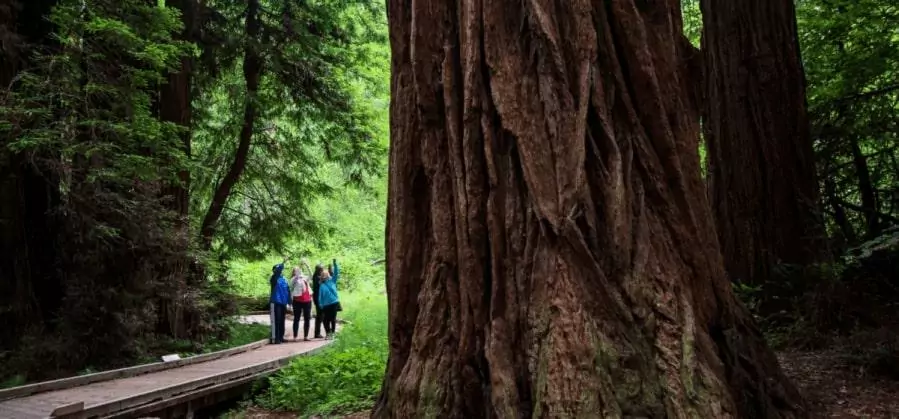
Another option is to sit back and let a local guide pick you up in San Francisco and take you to Muir Woods. This way, you arrive relaxed, informed, and ready to explore this incredible park. And remember, a bus takes the place of dozens of cars, reducing the impact on the environment.
Extranomical Tours offers tours to Muir Woods in the morning or afternoon, with park admission included. Check out our availability here!
Muir Woods FAQs
Where is the redwood forest near San Francisco?
Muir Woods National Monument is just a few miles north of San Francisco. The drive on Highway 101/Route 1 takes around 30 – 60 minutes and requires an advance parking reservation. Public transportation is available on the Muir Woods shuttle from Sausalito and Larkspur Landing.
How tall is Muir Woods’ biggest tree?
Muir Woods’ biggest tree is around 250 feet high. At maturity, some redwoods (Sequoia Sempervirens) can reach a height of 380 feet (116 meters).
Are sequoias and redwoods the same?
No. Not all redwoods are sequoias, but the two species of Sequoioideae are often referred to as “redwoods”. Giant sequoias are only found in the Sierra Nevada mountains — including Yosemite National Park — while coastal redwoods are located in a narrow band closer to the Pacific Ocean.
Is Muir Woods a national park?
No, Muir Woods is a national monument, not a national park. It was declared a national moment in 1908 by President Theodore Roosevelt. Today, the park is part of the Golden Gate National Recreation Area, a patchwork of lands which are part of the national park system.
What is there to do in Muir Woods?
The main attraction in Muir Woods are the coastal redwoods, the tallest trees in the world. Visitors can enjoy its boardwalks and trails through the several hundred old-growth redwoods. The park also hosts 380 other species of plants and animals, some endangered, like the northern spotted owl.
How far is the Muir Woods redwood forest from San Francisco?
Muir Woods is just 16 miles (28 km) from Union Square in San Francisco. It takes around 30 to 60 minutes to drive there depending on traffic. Shuttles are available from Sausalito and Larkspur Landing, which can be reached by one of San Francisco’s waterfront ferries.
How much time should you spend in Muir Woods?
Most visitors spend 2-3 hours in the park. The longest trail to Bridge 4 and back is approximately 2 miles (2 km) on flat, well-maintained pathways.
How do you get a parking permit to visit Muir Woods?
Book your advance reservation to Muir Woods at GoMuirWoods.com or call 1-800-410-2419. Parking reservations are not sold at the park and must be purchased prior to arrival.
Do you need a reservation to visit Muir Woods?
All personal vehicles arriving at Muir Woods need a reservation prior to arrival. If you arrive at Muir Woods without a reservation, you will be turned away. If you take a guided tour, you won’t have to make a parking reservation.
How should you dress for Muir Woods?
It’s best to dress in layers in Muir Woods, including a top waterproof layer in case of rain. Temperatures range from 40-70°F (5-21°C) degrees throughout the year. The Bay Area has a mild, temperate climate, but winters can bring sudden rainstorms and the trail can get muddy.
Can you camp in Muir Woods?
No, you can’t camp within the Muir Woods park boundaries. There are other camping options in the Marin County area, however.